
What Hapi Delivers

Updated: Jul 30, 2025
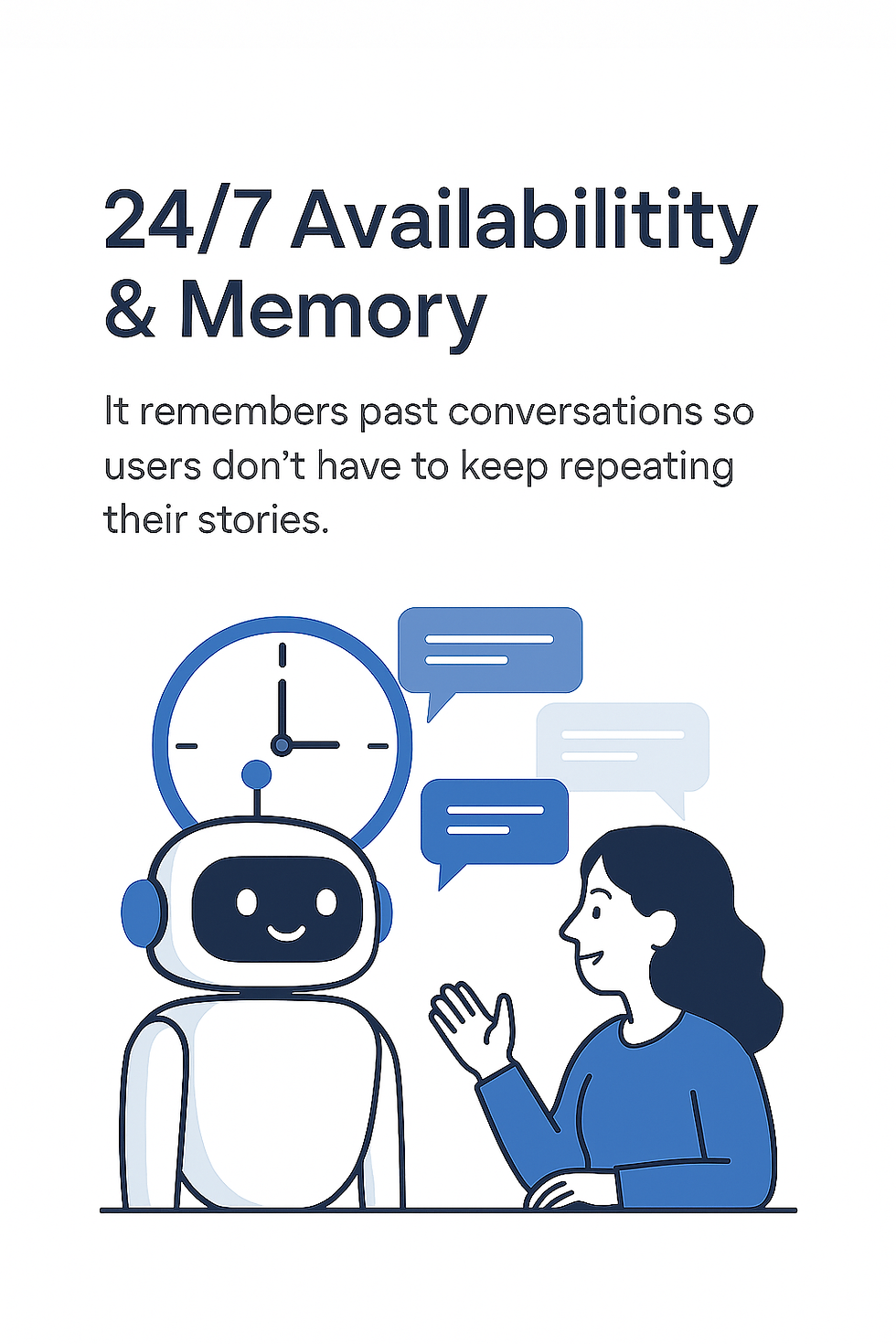
24/7 Availability & Memory
Hapi is always on. It remembers past conversations so users don’t have to keep repeating their stories.
Why does 24/7 matter?
People navigating reentry often face overwhelming uncertainty, logistical hurdles, urgent questions, and emotional stress can arise at any hour. Having access to support around the clock not only reduces anxiety but also builds trust in the system.
Crises and practical challenges rarely align with office hours. In the first weeks after release, when overdose mortality is especially high 1, delays in accessing help can have life-threatening consequences. Researchers focused on health equity emphasize the importance of offering virtual care outside of “usual business hours” to better serve marginalized populations 2.

This need for continuous access is also reflected in public expectations: nearly half of the individuals surveyed about digital government services said that 24/7 availability would benefit them by reducing the need to wait for a human agent 3. Yet, reentry planning often focuses solely on the moment of release, despite the fact that needs continue to emerge in the evenings and on weekends, times when most traditional services are unavailable 4.
Providing round-the-clock support ensures people can get timely help when they need it most, not just when the system is open.
How does it support staff?
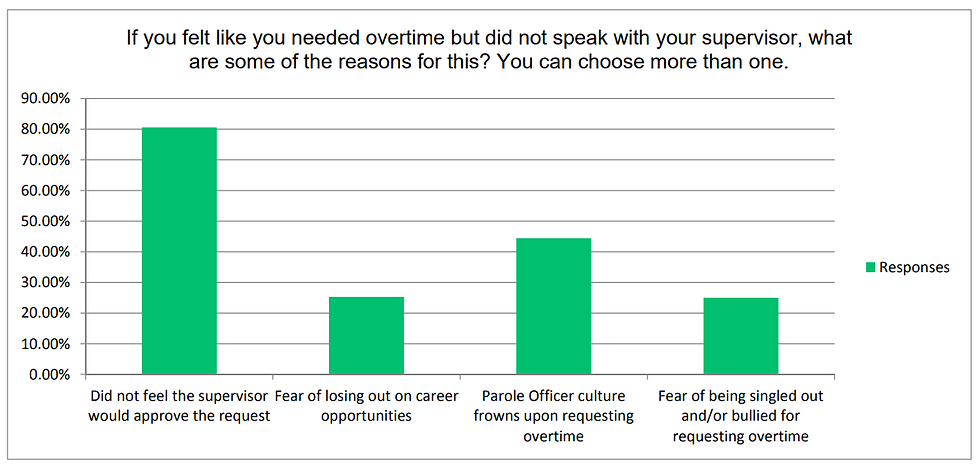
More than two-thirds (69%) of Canadian federal parole officers report carrying workloads so heavy that they cannot adequately protect the public 5. At the same time, generative AI systems have been shown to reduce human-handled contacts by up to 50%, particularly by automating routine “where/when/how” inquiries 6.
When Hapi answers questions like “How do I get there?” at 11 p.m., frontline staff are no longer overwhelmed by the same navigation calls the following morning, a shift supported by both documented workload strain and the demonstrated ability of AI to deflect repetitive contacts 6.
For frontline workers, a 24/7 digital support layer relieves the pressure of non-urgent inquiries, smooths daily workflows, and enables case managers to focus on more complex, human-centered tasks. It is not a replacement for human services, but a complement, extending their capacity, improving responsiveness, and protecting staff from burnout.
24/7 vs. 9–5
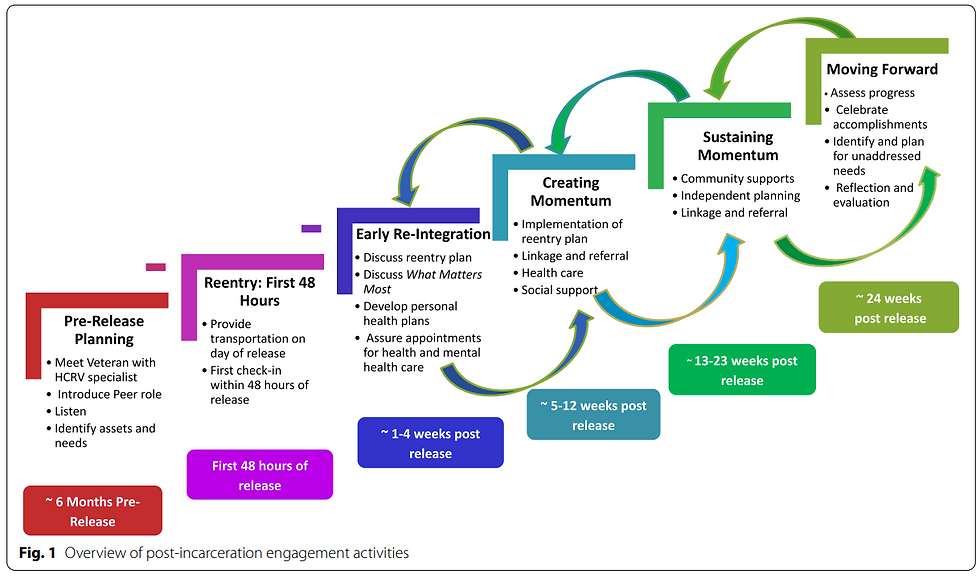
A traditional 9–5 service model assumes that people can make calls, ask questions, and access support during standard business hours. In reality, many cannot. Individuals navigating reentry often face unpredictable schedules, limited phone access, and urgent needs that don’t align with office hours. Meanwhile, essential services, such as parole check-ins, clinic appointments, or shelter intakes, operate under strict timelines and limited availability. These mismatches can lead to missed opportunities or unintentional violations 7,8. Providing after-hours access helps bridge this gap. When someone misses a bus, finds a door unexpectedly locked, or learns that service hours have changed, being able to get immediate guidance in real time can prevent the issue from escalating. Instead of waiting until the next day, when the damage may already be done, individuals can get timely, accurate support that keeps them on track and out of crisis. This kind of responsiveness is especially critical in the early weeks post-release, when people are at elevated risk of overdose, housing instability, and system failure 1,4.
A 24/7 model acknowledges the reality of reentry: that navigating complex systems doesn’t end at 5 p.m. It reduces the consequences of missed communication and helps ensure that tight deadlines don’t become barriers to stability.
How it feels for users
Knowing that support is available at any time can significantly reduce anxiety and decision fatigue during the already overwhelming process of reentry. Individuals navigating this transition are often faced with urgent choices and limited guidance, especially outside of business hours. Round-the-clock access to support helps ease that burden, offering reassurance and clarity when it’s needed most. Inference supported by studies showing people value faster, always-available digital help 7.
This kind of access also communicates something deeper: respect and autonomy. People should not have to wait, plead, or risk a technical breach simply because help was “closed.” 8. The ability to reach out at any hour reinforces the idea that their time, safety, and dignity matter.
Psychologically, knowing that help is consistently available builds trust, particularly for those who have experienced years of institutional unpredictability. That steady presence can be the difference between disengagement and continued effort. It sends a powerful message: your needs matter, whether it’s 2 p.m. or 2 a.m.
24/7 support also promotes equity. For individuals managing shift work, caring for children, or living with unstable housing, access to a phone or quiet moment may only come late at night. Services that adapt to real-life schedules, rather than expecting everyone to fit a standard mold, are more inclusive by design. They meet people where they are, rather than expecting them to navigate systems that weren’t built with their lives in mind.
Workload reduction snapshot
69 % of Canadian federal parole officers say their caseloads are too heavy to keep the public safe, and 92 % believe more staff would improve safety 5.
Front‑line caseworkers spend only 20–35 % of their week in direct client contact; the rest is paperwork and other admin 9.
Toronto’s 24‑hour Distress Centre handles about 60 % of its 120,000 annual calls after business hours, underscoring the need to track demand outside office time 10.
McKinsey finds that in banking, telecoms, and utilities, roughly half of customer contacts are already machine‑handled, and generative‑AI could automate up to 50 % more routine calls 6.
A 2024 meta‑review reports that chatbots can resolve up to 70 % of routine enquiries, freeing humans for complex issues 11.
Industry analyses project that scaling gen‑AI could cut human‑served call volumes by ≈50 % as adoption spreads over the next few years 6.
References


